


Especially this week with the passing of Toni Morrison I am reminded of her vision of “doing language.” Her words, and the way those words go together to create images and emotion, are a testament to how language is living because we “do” it: We construct and deconstruct, we mess with it, we use it in ways that are new and exciting…even if those ways come from the old and expected.
Language is enmeshed with the human experience. It is also our map of lived experience individually and collectively. When I was 12, my mother asked what one book I wanted for my birthday. I asked for Morrison’s book Beloved. I read it every night; I didn’t fully understand or grasp the words or actions in the book at that time, but I did feel deep emotion as I read it and long after. The language did something to my heart before my mind could process those words together. The book was an experience, and it haunted me. It’s a book that stayed with me and pushed me to believe and feel outside of my world.
I think a lot as I write and read and teach writing how to make words into pictures and movies–how can we mess with language to make people feel something beyond themselves? When I teach writing–especially personal writing–I experiment with ways for students to get messy with language. As a teacher, I am inspired by the moments my students are, in Morrison’s words, “doing” language. It’s the moment someone is hearing her voice for the first time through her own words on the page. It’s the moment someone has no words to say when she hears or reads the writing of her peer for the first time. My job as a teacher is to find ways to facilitate those moments for students and to help students see that they have the power and space to make those moments possible again and again.
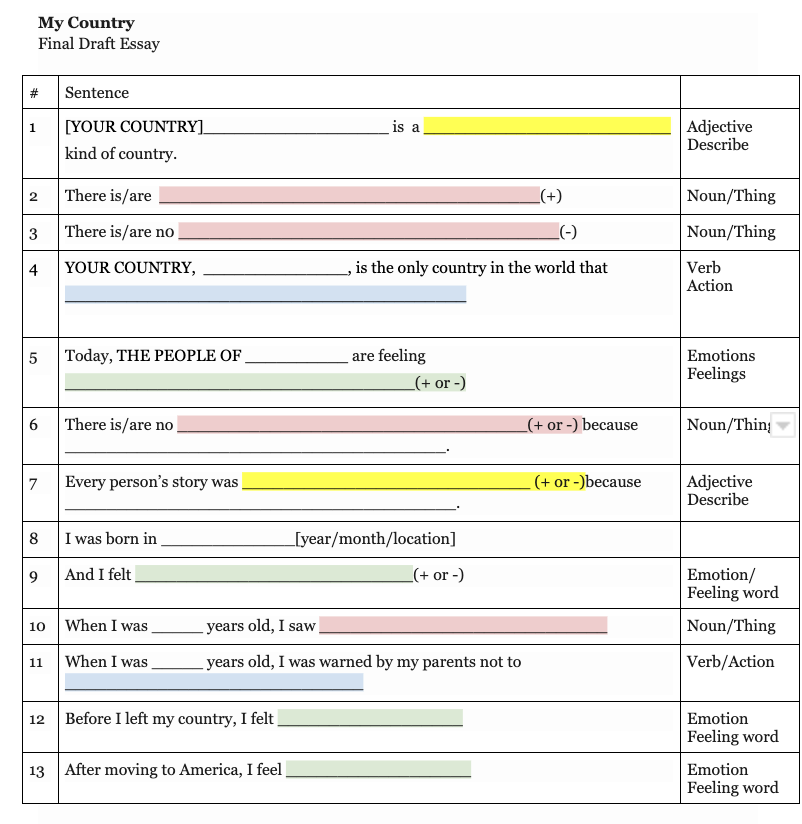


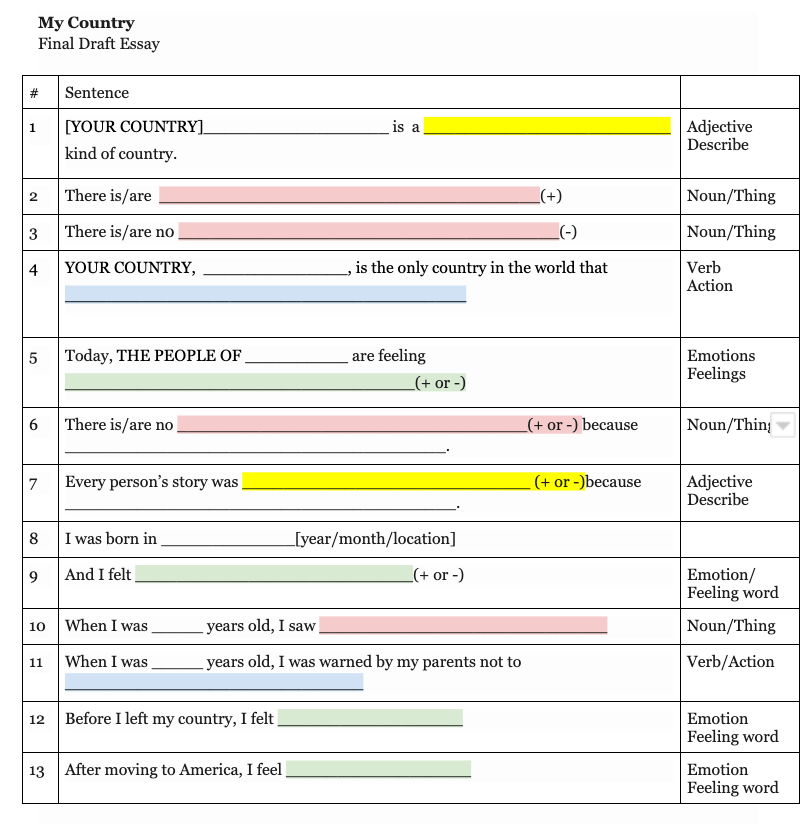
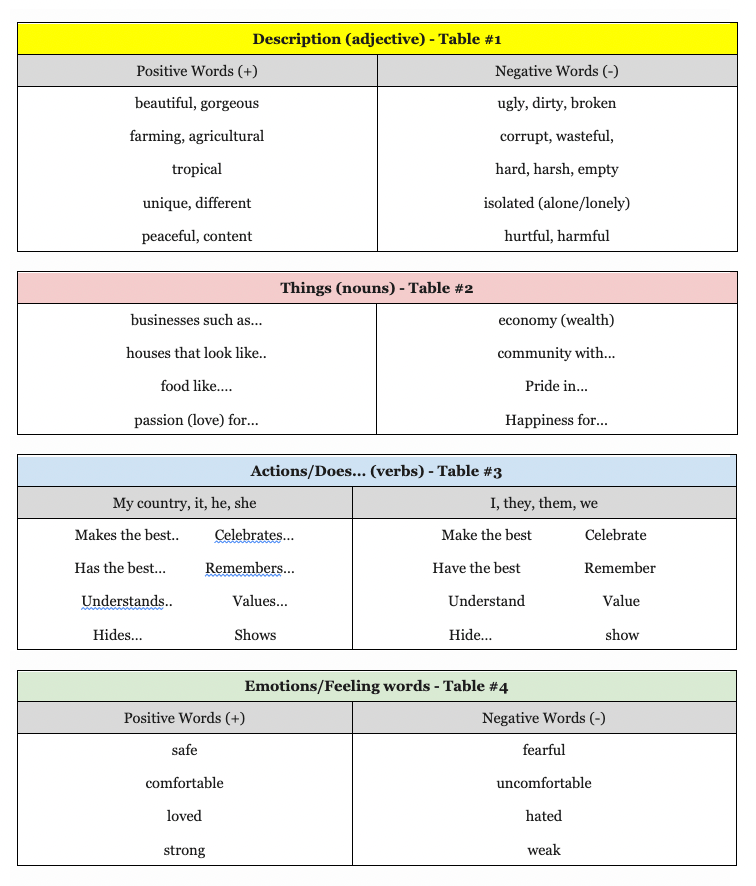
This past year in my ESL 3 class we dug into emotional language as part of personal storytelling. I created and used highly scaffolded storytelling organizers so emergent English speakers could access the power of storytelling. You can check the organizers out here. I didn’t want to just reach emotional language for its functionality as a rhetorical device. I wanted to give space for my students to explore the big ideas and big feelings of words that hold meaning in our lives. The English teacher in me calls these “themes” or thematic words. But they are more personal and emotional than their literary function: These words are the words that stop and start us. They ignite something in you that you maybe cannot define or recognize by sight or name, but that you hold space with. I want to help students recognize in themselves what I did when I first read Morrison’s Beloved.
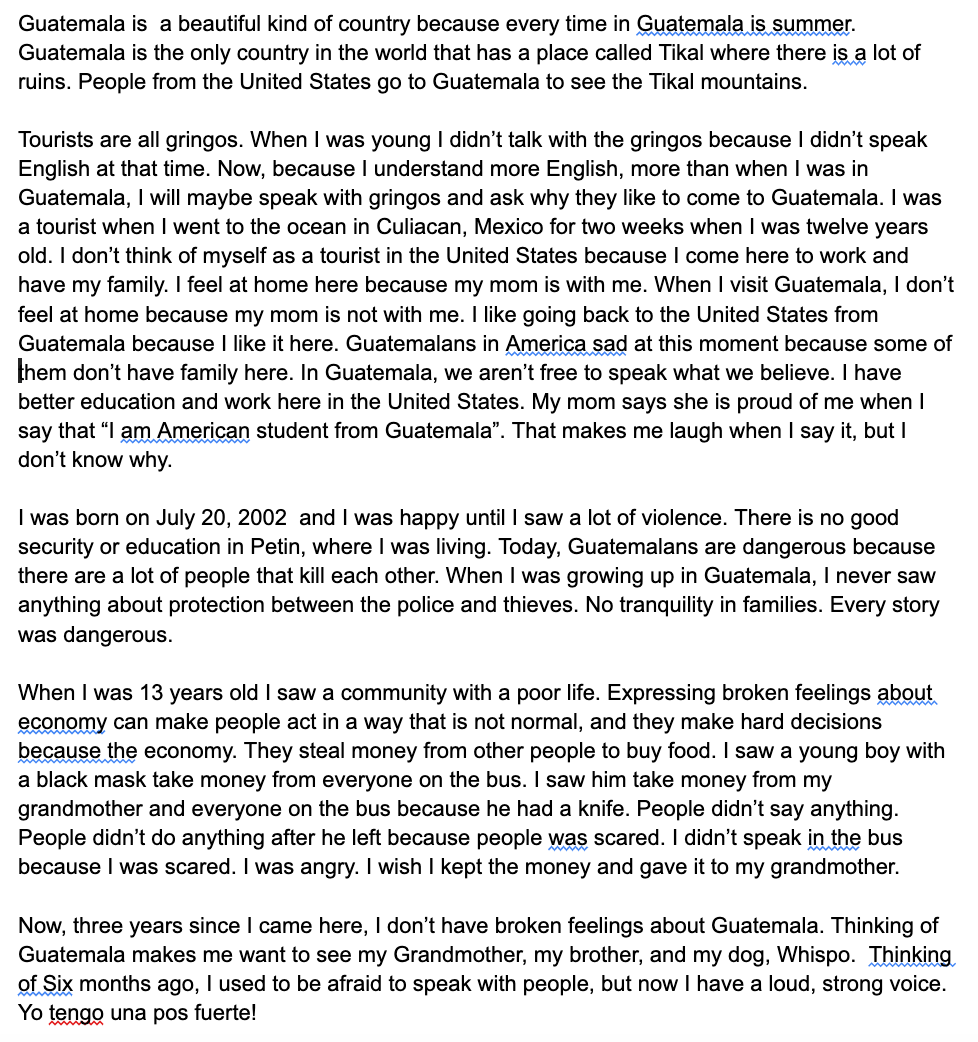
One student’s personal story, composed using the color-coded organizer above and linked in full below. The arc of the story takes the reader from past to present, and this writer beautifully claims her present and future in her words below.
 180newbeginnings.com