
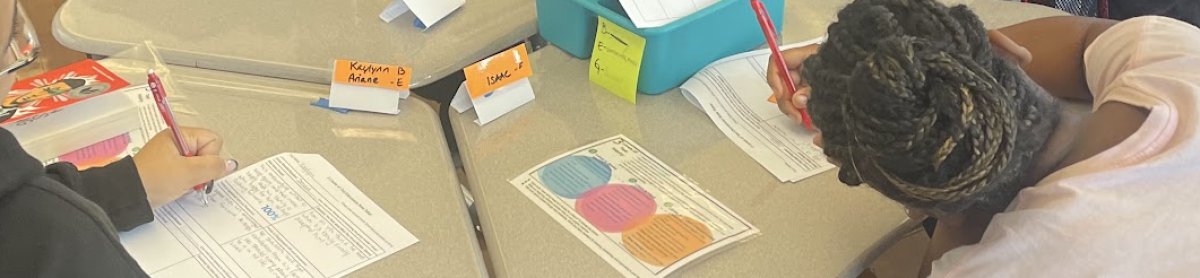

Sometimes, it’s good to scrap those painstaking plans and give in to your students’ requests for “but please–just one more day!”
My ESL 4 students were making their case for extending our final assessment to “just one more day.” I had planned for two hours of a debate, including everything from opening statements that were carefully pre-written in legal teams and practiced like a formal speech prior to debate day, cross examination sessions, team meetings, time-outs for researching additional evidence, and closing statements.
I started in-class debates when working with The Boston Debate League in my 10th grade ELA class and have tweaked the format over the years to extend the cognitive demand in different areas. Debates are dramatic play with students fully bought-in as they take on roles of Pro and Con or Defense and Prosecution.
This past year I adapted the debate structure I’d used in my ELA classes with a debate arguing for or against raising the minimum wage. Where I had always used debate as summative assessments of literature, this debate called on using informational texts and data the way my ELA debates used literary text as evidence. This adaption required skills in reading and synthesizing informational texts and also the agility to flip perspectives quickly in a debate to understand the argument “inside out” to develop counter arguments during the cross-examinations.
I spend a lot of time explicitly teaching questioning to further develop reasoning of an argument…and, to do this using text. This takes practice in many forms across discourse, reading, and writing. So when my ESL3 and 4 students pleaded for “just one more day” of debate, I did not hesitate to change my plan. This was a rich assessment: embedded in the curriculum, it was based on a sequence of formative assessments and aligned to standards. It reflected a clear Focus Language Goal and demonstrated growth in knowledge and skills. It required collaborative reading, writing, and thinking using complex text. Students had to listen carefully to each other, synthesize information, and redirect thinking in-the-moment.
The best part: It didn’t feel like a test. It was a real debate. It had an order that established expectations, but it was messy because it was real. Students believed in the process and their own part in owning that process. This, in my mind, is student-centered learning because it’s managed and enacted by students. Students push one another for evidence–they are choosing to not only engage as students taking an assessment but as decision-makers in a learning experience.
This is just one page from the Debate Packet that provides an organized space for students to record their attack questions (we attack with questions only). In my ELA 10 and AP Language classes students no longer require the scaffolding of “pause + think + talk + write” in order to craft attack questions and respond to opponents’ questions. This is a great scaffold to get students to the point of extemporaneously attacking and defending as a team. You can check out the full Debate Packet here. 
What worked really well was dividing the Closing Statement into four questioning segments to get students to really think through their final points. In a collaborative “huddle” students talked and wrote through their closing statement while practicing a concession (#1 below) as well as recalling their strongest evidence. This Closing Statement organizer empowered students to stand before our judging panel and read aloud their planned writing.

 180newbeginnings.com